

Fall Heating Maintenance in Austin, TX: Your HVAC Prep Checklist

Austin doesn’t get a long winter, but it doesn’t give much warning before the first cold front either. One week you’re still running the AC, and the next you’re reaching for a thermostat you haven’t touched since March. A furnace or heat pump that’s been sitting idle that whole time doesn’t always start back up without a hiccup, which is exactly why heating maintenance in Austin, TX belongs on your fall to-do list, not your January one.

Woman relaxing at home with her cat during cold weather season

The good news is that getting ready doesn’t take much. A handful of tasks you can knock out yourself, paired with one professional visit, covers most of what your system needs before the temperature actually drops.

How Often Should HVAC Be Serviced?

As a homeowner, you should consider having your HVAC serviced at least once a year, at minimum. Most homeowners split that into two visits, an AC tune-up in spring and a heating tune-up in fall, so each system gets checked right before the season it’s about to carry the load. Systems that do double duty, like a heat pump running heating and cooling out of the same unit, still benefit from a fall-specific check even though they technically run all year.

The point of timing it this way is simple: you want a technician looking at the equipment before it’s under pressure, not after.

What Is HVAC Preventative Maintenance?

Preventative maintenance is a scheduled visit where a technician inspects and tunes up your system before anything has actually gone wrong, as opposed to a repair call, which only happens after it has. It’s a smaller, cheaper visit up front meant to head off a bigger one later.

The value shows up gradually rather than all at once. A worn part or a loose connection rarely takes a system down overnight. What it does is make the equipment work harder than it needs to, which shortens its lifespan over time. Catching that early, before the season’s first real cold spell, is the entire point of scheduling the visit in fall instead of waiting.

Your Fall Heating Maintenance Checklist for Austin Homes

A few of these you can handle yourself. The rest are worth having a technician confirm while they’re already on site for a tune-up.

  • Replace your air filter, and set a reminder to check it every one to three months through winter
  • Clear leaves, debris, and yard clutter away from any outdoor equipment
  • Test your thermostat to confirm it’s switching between heat and cool correctly and reading temperature accurately
  • Check weatherstripping around doors and windows for gaps that let warm air escape
  • Confirm the furnace reaches your set temperature within a few minutes of turning it on
  • Ask about the Total Comfort maintenance plan if you’d rather have biannual inspections scheduled automatically instead of remembering to book them yourself

Furnace Maintenance in Austin: What a Fall Tune-Up Covers

A furnace that hasn’t run since last winter needs more than a quick glance before it goes back to work. A heating tune-up focuses on the parts most likely to give you trouble after months of sitting unused: the ignition system, the flame sensor, and the heat exchanger, which gets checked for cracks since that’s a safety issue, not just a performance one. A technician will also confirm the blower motor is running smoothly and that the system cycles on and off the way it should.
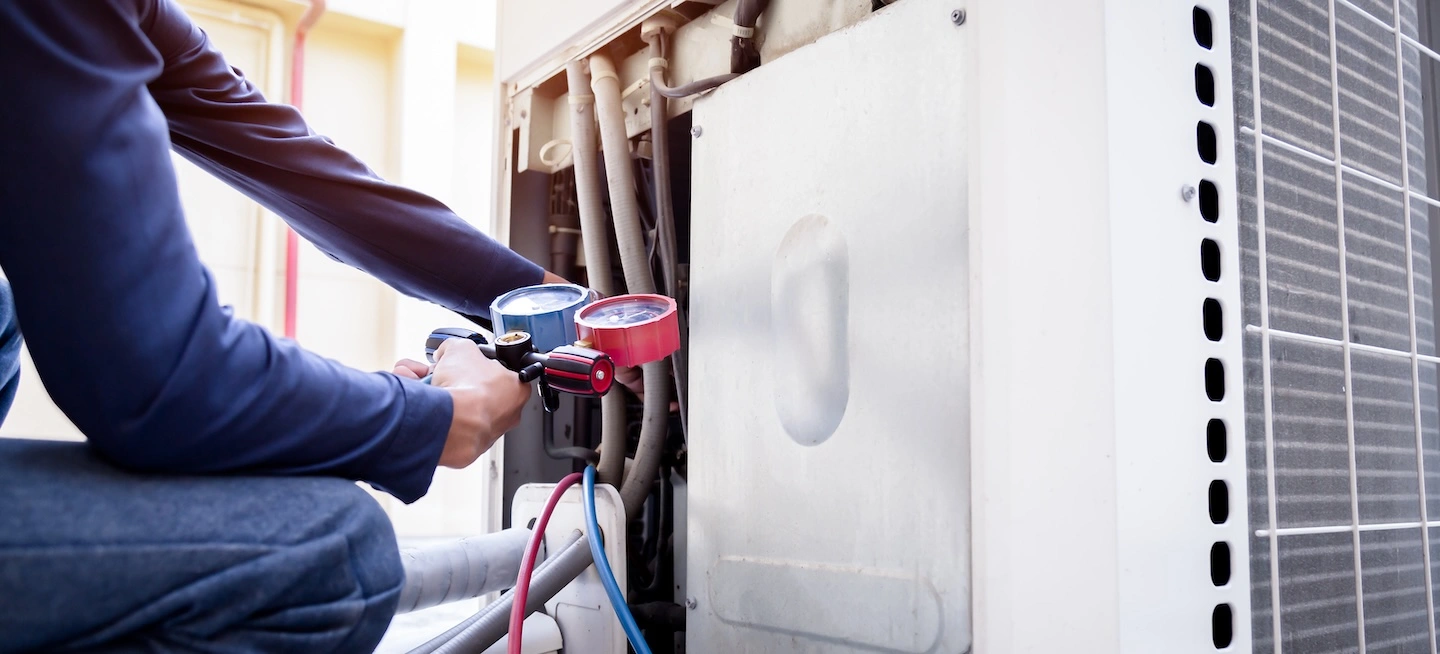
HVAC technician checking on an outdoor heat pump unit

If your home runs on a heat pump instead of a traditional furnace, the visit looks a little different. It centers on refrigerant levels, the outdoor unit, and making sure the system switches cleanly between heating and cooling modes.

Signs You Need Heating Maintenance Before Winter

A few signs are worth acting on before your scheduled visit so you can be sure you stay warm through the winter months. Here are a few that should have you speed-dialing TemperaturePro:

  • Uneven heating from room to room, or a system that runs constantly without hitting the temperature you set
  • A utility bill that’s noticeably higher than last winter’s is also a reason to get a technician out sooner
  • Not sure if your heater noise is normal? Our guide to what heating noises mean can help you figure out what you’re hearing before you call
  • Age matters too. A furnace or heat pump past the ten-year mark carries more wear than a newer system, which makes a fall check-in more important, not less

If any of this sounds familiar, don’t wait for your regularly scheduled visit to have it looked at. Catching it now is a lot cheaper than dealing with a full breakdown once the cold really sets in.

FAQ

How often should HVAC be serviced?

At least once a year, ideally with one visit for cooling in spring and one for heating in fall.

What is HVAC preventative maintenance?

A scheduled inspection and tune-up performed before a problem shows up, rather than a repair call made after something’s already broken.

Can I handle fall HVAC prep myself?

Some of it, yes. Changing the filter and clearing debris from outdoor equipment are fine to do on your own. Anything involving the heat exchanger, refrigerant, or electrical components should go to a licensed technician.

Is furnace maintenance in Austin worth it if winters are mild?

Yes. Mild isn’t the same as predictable. Austin still gets hard freezes most years, and a furnace that hasn’t been checked since last winter is more likely to struggle exactly when you need it.

Get Ahead of the First Cold Front

Fall doesn’t last long here, which is exactly why it’s worth using it instead of waiting until you’re standing next to a furnace that won’t start. If it’s been a year or more since your last tune-up, reach out to TemperaturePro and give us a call at (512) 953-5822 and get it checked before you actually need it.

What Austin Homeowners Can Claim in HVAC Tax Credits and Rebates in 2026

Your AC has been struggling through another brutal Austin summer, and you’ve finally decided this is the year you replace it. You’ve done some reading, maybe heard something about tax credits, and you’re wondering how much of that actually applies to you right now. The answer depends on a few things, and it’s worth taking ten minutes to understand what’s genuinely available before you call anyone for a quote.

Here’s a clear picture of the HVAC tax credits and rebates Austin homeowners can claim in 2026, what’s changed from previous years, and how to make sure you’re not leaving money on the table.

What Happened to the Federal Tax Credit

If you’ve come across information about a federal tax credit for heat pumps, you’re probably reading about the Section 25C Energy Efficient Home Improvement Credit. Under the Inflation Reduction Act, that credit offered up to $2,000 back for qualifying heat pump installations and up to $600 for central air conditioners. For a few years, it was a meaningful incentive that factored into a lot of homeowners’ upgrade decisions.

That credit was terminated for any equipment placed in service after December 31, 2025, through legislation signed in July of last year. If your system was fully installed and operational before that date, you can still claim the credit on your 2025 federal tax return using IRS Form 5695. Talk to a tax professional if that applies to you. For anyone planning a new installation in 2026, the federal credit is no longer part of the picture.

That said, Austin homeowners aren’t starting from zero. The local utility rebate program here is one of the strongest in Texas, and there’s additional money in the pipeline at the state level.

Austin Energy’s Power Saver Rebates

This is the most important savings opportunity available to Austin homeowners right now, and a lot of people don’t realize how good it actually is. Because Austin Energy operates as a city-owned municipal utility rather than a deregulated retail provider, it funds its own rebate program independently of any federal tax credit. Those rebates are active and available today.

For a qualifying whole-home heat pump installation, the Power Saver program currently averages around $3,000 in rebates. Income-qualified households can receive $4,000 or more. The program also offers $1,000 for an ENERGY STAR-certified heat pump water heater, plus additional rebates for duct sealing and insulation upgrades.

Think about what that means practically. If your household is replacing a 15-year-old system that’s been running up $400 electricity bills every July, a heat pump upgrade with a $3,000 rebate and 0% financing doesn’t just improve your comfort. It changes the math on your monthly expenses in a real way. Austin Energy partners with Velocity Credit Union to offer that zero-percent financing on qualifying projects, which means you can spread the cost without paying interest on top of it.

To qualify for the heat pump rebate, your system needs to meet these minimum efficiency thresholds:

  • SEER2 16 or higher for cooling performance
  • HSPF2 8.5 or higher for heating efficiency
  • ENERGY STAR certification
  • Installation by an Austin Energy participating contractor

A few rules to know before you schedule: your home needs to be at least 10 years old, you must submit your rebate application within 90 days of the installation date, and Austin Energy will conduct a post-installation inspection. Systems that include electric resistance heating elements are not eligible. Rebate amounts and program requirements may change throughout the year.

Texas HOMES and HEAR Rebates Are Coming

Beyond what Austin Energy already offers, there’s more money on the way for Texas homeowners. The Inflation Reduction Act separately allocated $690 million to Texas for two federally funded rebate programs, administered through the Texas State Energy Conservation Office. These programs were funded independently of the tax credit provisions that expired, so they are still moving forward.

The HOMES program (Home Energy Performance-Based, Whole-House Rebates) is open to homeowners at all income levels. It offers up to $8,000 for whole-home upgrades that reduce your home’s energy use by 35% or more, with smaller rebates available for reductions in the 20 to 35 percent range. A heat pump installation combined with duct sealing or added insulation is one of the most effective ways to hit those thresholds.

The HEAR program (Home Electrification and Appliance Rebates) targets income-qualified households and can cover heat pumps, heat pump water heaters, insulation, and electrical panel upgrades.

Texas has not formally launched either program yet. SECO has partnered with APTIM Federal Services to build the application infrastructure, with launch expected in late 2026 or 2027. When the programs open, they may be stackable with Austin Energy’s utility rebates for qualifying homeowners.

What AC Replacement Actually Costs in Austin

Rebate numbers are more useful once you have a realistic sense of what you’re working with on the cost side. AC replacement cost in Austin varies depending on the system type, your home’s size, and the scope of the installation. Here are general ranges as a starting point:

  • Central AC replacement: $5,000 to $10,000 installed
  • Whole-home heat pump: $8,000 to $16,000 installed
  • Mini split system: $3,000 to $8,000 or more depending on the number of zones

After Austin Energy rebates, heat pump installations in the Austin Energy service area commonly land between $5,000 and $11,000 for income-qualified customers. For a homeowner who’s been putting off a replacement because the upfront cost felt out of reach, that’s a number that starts to look a lot more manageable, especially with financing available.

HVAC Financing Options in Austin

Not every homeowner has $10,000 sitting in savings waiting for the AC to die. Most people are managing a mortgage, car payments, and the general unpredictability of owning a home. When the system goes out in the middle of August, the last thing you want is to feel like you have no options.

TemperaturePro Austin offers HVAC financing through Upgrade, with affordable monthly payments, flexible terms, and online account management. Combined with Austin Energy’s 0% APR loan through Velocity Credit Union on qualifying projects, you can move forward with a high-efficiency system without the pressure of covering the full cost upfront. It’s worth asking about both options when you get your estimate so you can see the full picture before you make a decision.

H2: Getting the Most Out of What’s Available

A few practical steps make the difference between collecting the full rebate and missing it on a technicality.

First, confirm your address is in the Austin Energy service territory. The Power Saver rebates only apply to Austin Energy customers. Parts of the Austin metro, including some areas of Round Rock, Pflugerville, and surrounding suburbs, are served by Oncor or Pedernales Electric, which have separate programs.

Second, use an Austin Energy participating contractor. The rebate requires it, and your contractor should be able to walk you through which systems qualify for your specific home before you commit to anything.

Third, mark your calendar the day the installation is complete. You have 90 days to submit your rebate application, and that window closes faster than it feels like it will.

Frequently Asked Questions About HVAC Rebates and Credits in Austin

Can I still claim the federal Section 25C credit if I installed my system before 2026?

Yes. If your qualifying system was installed and placed in service on or before December 31, 2025, you can claim the credit on your 2025 federal return using IRS Form 5695. Consult a tax professional to confirm your eligibility and calculate the exact credit amount.

Does the Austin Energy rebate apply to a standard AC replacement, or only heat pumps?

The largest rebates in the Power Saver program are tied to heat pump installations. Central air conditioner upgrades may qualify for separate rebates depending on efficiency ratings and current program availability. Check savings.austinenergy.com for the most current information before purchasing.

What if I don’t qualify for the Austin Energy rebate because my home is newer than 10 years?

It’s worth calling Austin Energy directly to understand your options. Manufacturer rebates and financing are still available regardless of home age, and the Texas HOMES and HEAR programs, once launched, may have different eligibility structures.

Ready to See What Your Home Qualifies For?

TemperaturePro Austin installs a range of high-efficiency systems built to meet Austin Energy rebate thresholds, including Trane variable-speed heat pumps rated up to SEER 20. Our NATE-certified technicians are not paid on commission, so the recommendation you get reflects what your home actually needs. We serve Austin and the surrounding communities.

Get started by requesting a free estimate online. We’re available 24/7, including weekends and after-hours emergencies.

Rebate amounts and eligibility requirements are subject to change. Verify current terms with Austin Energy and SECO before purchasing equipment. Consult a qualified tax professional regarding any federal credit eligibility.